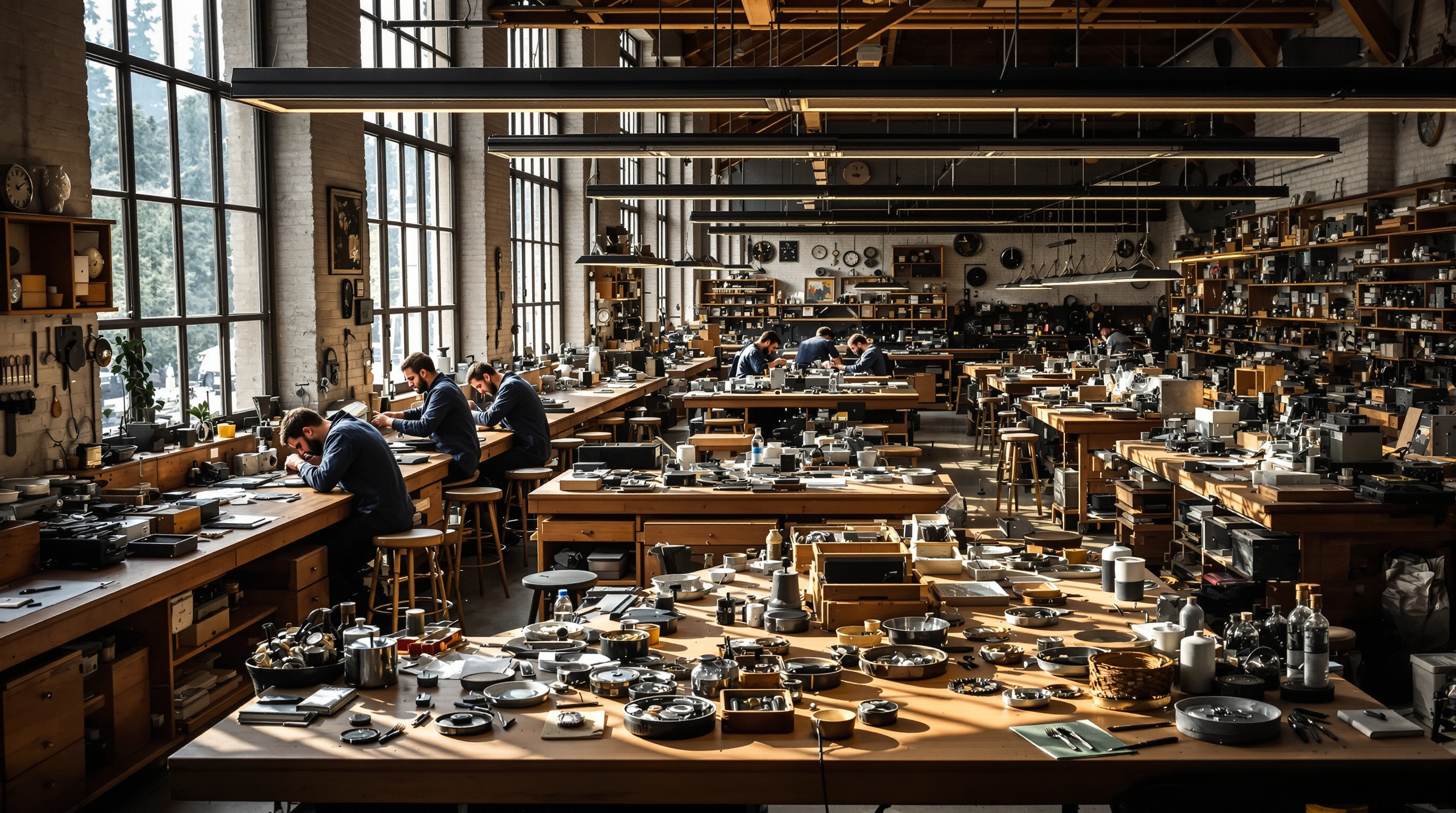
The world of luxury watchmaking is populated by houses with distinctly different identities, philosophies, and technical traditions. Understanding these differences — what distinguishes one manufacture from another, and where each brand's genuine strengths lie — is essential to making purchases that align with your values as a collector.
The Swiss Manufacture Model
A “manufacture” in the Swiss watchmaking tradition is a workshop that produces its own movements — designs, develops, and builds the calibres inside its cases — rather than purchasing ébauches (raw movement blanks) from specialist suppliers. Manufacture status carries significant prestige and is associated with the highest levels of vertical integration.
True manufactures control the entire creation process: from research and development of new calibres, through in-house machining of plates, bridges, and wheels, to assembly, regulation, and quality control. This integration enables proprietary innovations that cannot be replicated by brands purchasing movements from common suppliers.
The Independent Watchmakers
Alongside the established houses, a cadre of independent watchmakers operates at the absolute apex of the craft. These ateliers — often founded and operated by a single named watchmaker — produce movements in very small volumes according to a personal vision uncompromised by commercial considerations of scale.
The work of independents like Philippe Dufour, François-Paul Journe, and Peter Speake-Marin has forced re-evaluation of what is possible in watchmaking. The Académie Horlogère des Créateurs Indépendants (AHCI) — the association of independent watchmakers — provides a useful reference for this world.
Heritage vs. Innovation
The tension between heritage and innovation defines much of luxury watchmaking's current creative discourse. Some houses build their identity almost entirely on continuity with the past — producing modern interpretations of archive designs and emphasising centuries of unbroken manufacture. Others push actively into new materials, new complications, and new design languages, treating heritage as a foundation rather than a constraint.
Neither approach is inherently superior. Heritage-oriented brands offer the collector a direct connection to horological history and the security of proven long-term market relevance. Innovation-oriented brands offer the excitement of genuine technical progress. The most thoughtful collectors engage with both philosophies.
Regional Traditions
While Switzerland dominates fine watchmaking, Germany's Saxonian tradition — centred in Glashütte — offers a distinctive aesthetic and philosophical alternative. German horology emphasises movement finishing of extraordinary precision: three-quarter plates, heat-blued screws, Glashütte ribbing (a variant of côtes de Genève), and bridges finished to perfect planarity.
Japanese high horology — represented by a small number of manufacturers producing highly complex movements in tiny volumes — has gained increasing recognition internationally. Japanese finishing traditions, rooted in entirely different craft heritage, produce movement surfaces of breathtaking quality through techniques not commonly used in European watchmaking.
What Brand Prestige Actually Represents
Brand prestige in watchmaking is a compound of multiple factors: the technical quality of the manufacture's calibres, the historical significance of particular references, the brand's commercial discipline in controlling supply relative to demand, and the cultural associations that accumulate around a brand over decades of positioning. Not all of these factors directly reflect the quality of the object on your wrist.
The experienced collector learns to distinguish between brand prestige — which may be substantially a marketing construct — and genuine manufacture quality, which can be assessed through objective criteria: movement finishing standards, calibre architecture, service network quality, and the documented longevity of the brand's references in service.