A luxury watch is distinguished as much by the quality and selection of its materials as by its movement. The case, crystal, dial, and strap each contribute to the watch's performance, durability, and aesthetic character. Understanding materials allows you to evaluate a timepiece with the eye of an informed connoisseur.
Case Materials
Stainless Steel
316L stainless steel has been the dominant case material in luxury watchmaking since the mid-twentieth century. Its properties are ideally suited to the purpose: excellent corrosion resistance, hardness sufficient to resist most everyday wear, and the ability to take both brushed and polished finishes that can be combined for sophisticated visual contrast. More recently, proprietary high-hardness alloys have been introduced to extend wear resistance further.
Gold
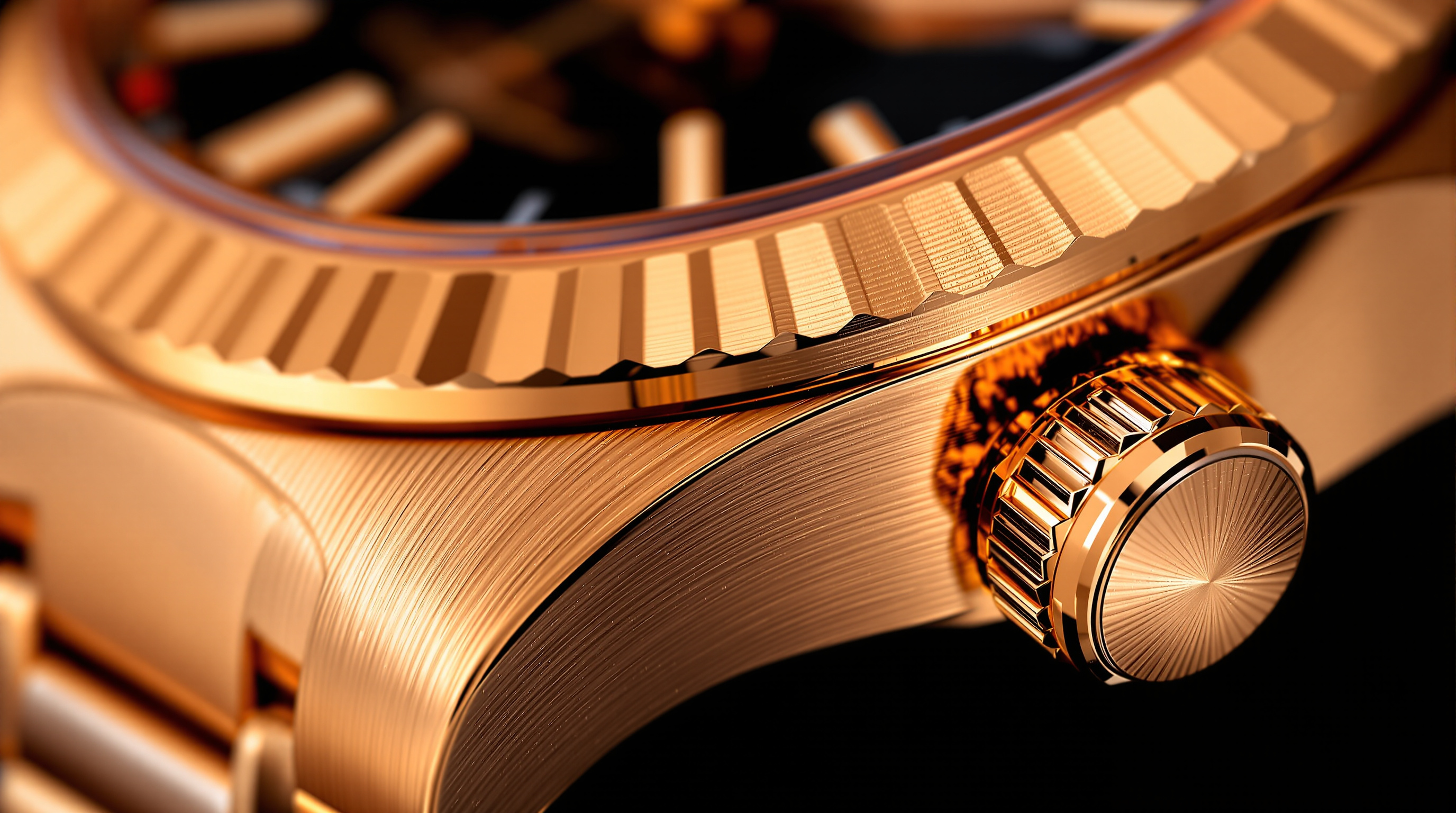
Gold cases are produced in three primary colour variants. Yellow gold, the traditional material of fine watchmaking, combines gold with silver and copper. Rose gold incorporates a higher copper proportion, producing warmer pink-red tones that have dominated the luxury market for the past decade. White gold, alloyed with palladium or platinum and usually rhodium-plated, provides the appearance of a platinum case at lower cost.
Platinum
The premier case material, platinum (typically Pt950, meaning 95% pure) offers a distinctive cool grey lustre, exceptional density, and extraordinary rarity. Platinum is vastly more difficult to work than gold — it requires higher temperatures to cast and greater skill to finish. The material's weight on the wrist is immediately perceptible and prized by those who associate heft with quality.
Titanium
Grade 5 titanium offers stainless steel's structural integrity at approximately 40% lower weight, with superior corrosion resistance even in salt water. Its characteristic grey tone and lightness make it the preferred choice for large-diameter professional and sports watches.
Ceramic and Alternative Materials
High-tech ceramics — typically zirconium oxide (ZrO2) — are essentially scratch-proof under normal conditions, registering 1250 HV on the Vickers hardness scale versus steel's 200–300 HV, though they are more brittle and can chip under sharp impact. Carbon composite materials (ADLC, DLC, forged carbon) offer similarly extreme hardness with dramatic visual aesthetics.
Crystal Materials
Acrylic (hesalite) is the vintage standard, valued for its ability to be polished to remove scratches and for its clarity. Mineral glass, heat-treated to increase hardness, is the mid-market standard. Sapphire crystal, synthetic corundum with a hardness of 9 on the Mohs scale, is the luxury standard and essentially scratch-proof in normal use. Anti-reflective coating dramatically improves legibility by reducing surface reflections.
Dial Materials
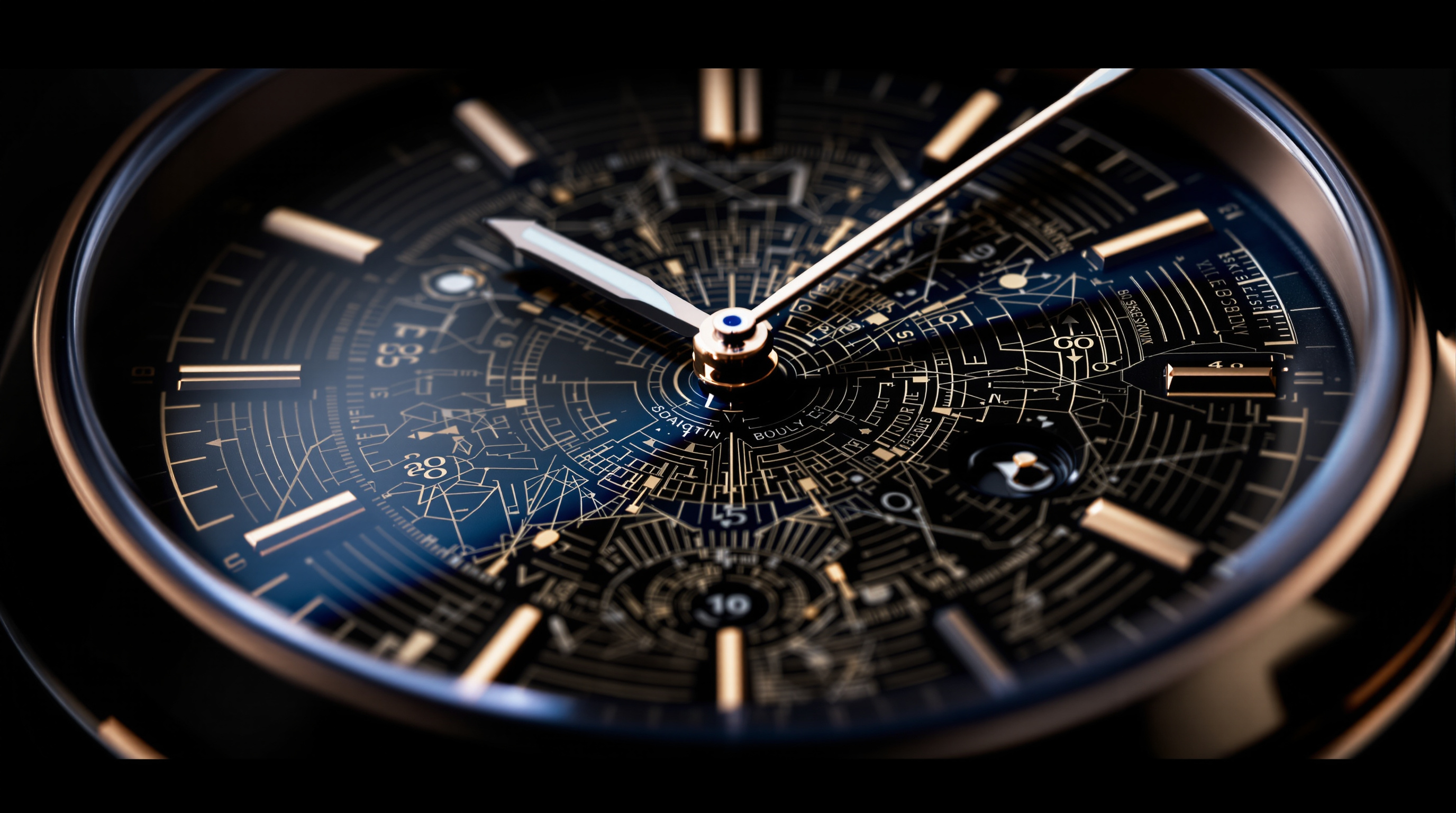
The most common are lacquered or guilloché-engraved brass dials — the guilloché process uses a rose engine lathe to cut intricate geometric patterns that catch light differently across their surface. Grand feu enamel dials, fired at high temperatures in a kiln, produce a depth of colour impossible to achieve with paint and are the most expensive dial type to produce.
Meteorite, mother-of-pearl, stone (onyx, malachite, turquoise), and wood veneers represent the spectrum of natural material dials. Each piece is unique — the Widmanstätten patterns in a meteorite dial are formed during millions of years of geological cooling and cannot be replicated. The Federation of the Swiss Watch Industry tracks production across these categories annually.
Straps and Bracelets
Alligator and crocodile leather — distinguished by their scale pattern — are the traditional luxury strap materials, prized for their durability and the way they soften and conform to the wrist over years of wear. Rubber straps, once considered purely functional, now appear in prestige finishes with perforation patterns and colour gradients.
Metal bracelets integrate structurally with the case and offer the most secure attachment. The quality of a bracelet's construction is revealed in how well adjacent links articulate, whether the clasp mechanism feels positive and secure, and the consistency of surface finishing across the entire length.