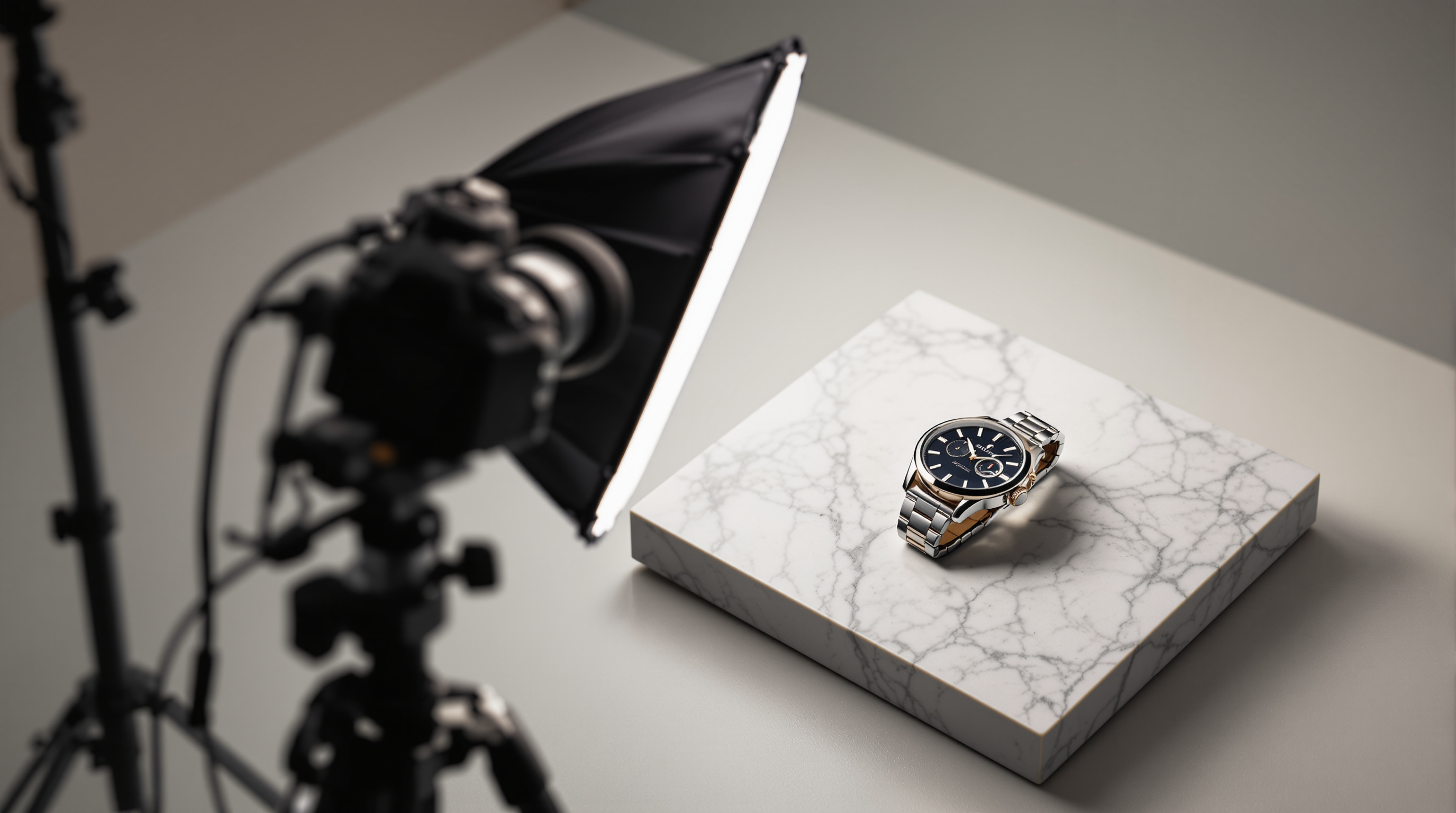
Watch photography has become a discipline in its own right — one that combines technical photographic knowledge with an understanding of what makes a particular timepiece visually compelling. Whether you want to document your collection, create images for sale, or share your enthusiasm with a community of enthusiasts, the principles of excellent watch photography are learnable and rewarding to apply.
Equipment Fundamentals
You do not need professional equipment to take excellent watch photographs, but certain tools make the process considerably easier. A camera with manual exposure control and an interchangeable lens system gives you the flexibility to adapt to different lighting conditions. Macro lenses, designed to focus at very short distances, reveal the detail of dials, movements, and case finishing that make fine watches worth photographing in the first place.
For smartphone photographers — and contemporary phone cameras produce genuinely impressive macro results — third-party clip-on macro lenses extend your phone camera's minimum focus distance considerably. A small tripod is essential regardless of your camera choice: macro photography amplifies camera shake to a degree that handheld shooting cannot reliably overcome.
Lighting Techniques
Light is the single most consequential variable in watch photography. A poorly lit watch will not be rescued by exceptional equipment; a well-lit watch will look exceptional even through a modest camera. The challenge with watches is their mixture of reflective materials — polished metal, glass, glossy lacquer — that create specular highlights and reflections that can obscure the watch's character.
Diffused natural light — a north-facing window on an overcast day — provides soft, consistent illumination that wraps around the case and reduces harsh reflections. Light tents and diffusion panels create controlled soft-box lighting in situations where window light is unavailable. A single, strongly directional light source with a large diffusion panel creates the dramatic shadows and highlights that give luxury watch images their characteristic editorial drama.
Composition and Angles
The most frequently used angles each serve a specific purpose. A direct overhead flat-lay — watch face up, perfectly parallel to the lens — reveals the dial design with maximum clarity and symmetry. A three-quarter elevated angle shows both the dial and the case profile simultaneously, communicating the watch's three-dimensional form. Pure case-profile shots emphasise case thickness and the interplay of brushed and polished surfaces.
Detail shots — isolating a crown, a clasp, a movement complication, a subdial — tell the story of craftsmanship that full-watch images cannot. The combination of full watch and detail images in a single shoot gives viewers the full vocabulary of a timepiece.
Setting and Context
The surface on which a watch is photographed contributes as much to the image's overall feel as the watch itself. Dark slate or marble creates drama and luxury; aged leather suggests heritage and tradition; pale marble communicates cleanliness and modernity. Natural elements — stone, wood, linen — contextualise the watch in a world outside the studio.
Lifestyle contexts — a watch on a wrist in an evocative environment — are among the most technically challenging but visually powerful images. For community sharing and inspiration, the watch photography community on social media provides an enormous range of approaches to draw from.
Post-Processing
Minimal post-processing produces the most faithful results for documentation purposes; more creative processing suits editorial or artistic contexts. For any serious watch photography, lens correction profiles, white balance calibration, and careful highlight recovery to address reflective surfaces are standard steps. Sharpening should be applied conservatively — excess sharpening produces an artificial texture in fine metal surfaces that looks immediately unnatural to trained eyes.